Best Whole House Water Filter for Utah Hard Water (2026 Guide)
Find the best whole house water filter for Utah's hard water. Learn about 7-stage filtration, chlorine removal, and how to protect your plumbing and appliances.
Noah Hoggan
If you own a home in Utah, you likely already know the daily struggle: the white scale crusted on your faucets, the spotty dishes that never look clean, and the dry, itchy skin that lotions can’t seem to fix.
We have spent over 20 years serving Salt Lake County, and we see these frustrations every single day.
Salt Lake Valley water is notoriously hard—typically ranging from 13 to 25 grains per gallon (GPG) depending on your specific zip code—and recent 2025 water quality reports highlight other concerns like arsenic and disinfection byproducts.
Our team knows that a simple pitcher filter isn’t enough to protect your home’s plumbing or your family’s health.
A whole house water filter addresses these problems at the source—where water enters your home—so every faucet, shower, and appliance delivers cleaner, safer water.
In this guide, we’ll walk you through exactly what makes a filtration system “Utah-proof” and how to choose the right setup for your home.
Why Utah Homes Need Whole House Filtration
Utah’s municipal water supply is treated to meet federal safety standards, but “compliant” doesn’t always mean “ideal” for your home or skin.
We often explain to homeowners that the journey your water takes—through mineral-rich limestone in the Wasatch Range—is what packs it with rock-hard minerals before it ever reaches your tap.
Here is what Salt Lake County homeowners are actually dealing with in 2026:
- Extreme Hardness: Levels often exceed 15 GPG in areas like Sandy and West Valley City, which is classified as “very hard” and can ruin appliances in half their expected lifespan.
- Summer Water Blending: During peak summer months, many districts supplement mountain water with groundwater from deep wells, which drastically increases mineral and sediment content.
- Disinfection Byproducts (DBPs): Chemicals like Bromodichloromethane form when chlorine reacts with organic matter, and recent testing shows these often persist in tap water.
- Specific Contaminants: Local geology contributes to naturally occurring elements like Hexavalent Chromium (Chromium-6) and Arsenic appearing in our water supply.
A whole house filter installed at your main water line treats every drop before it enters your pipes.
Our technicians have seen firsthand how this single upgrade protects your entire plumbing system, preventing the thousands of dollars in damage that untreated Utah water causes over time.
What to Look for in a Whole House Water Filter
Not all filtration systems are built to handle the heavy mineral load found in the Beehive State.
We strongly advise against buying generic “off-the-shelf” systems designed for the softer water of the East Coast.
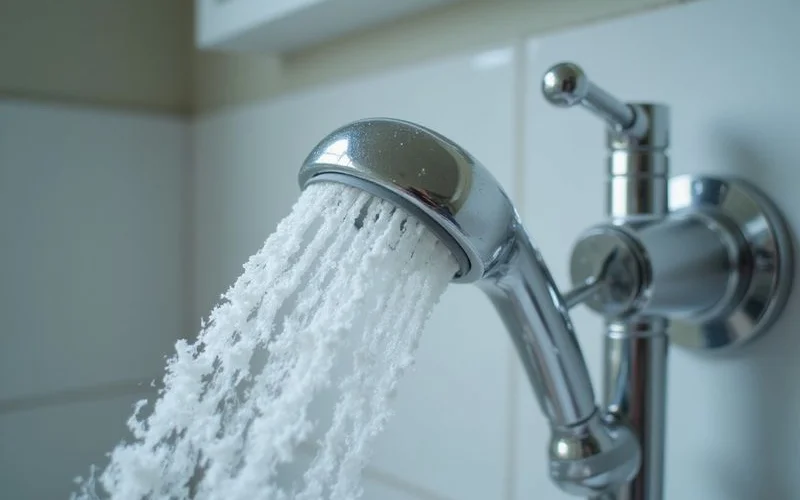
Here are the specific features you need to effectively treat Utah water:
1. KDF Media is Mandatory
Standard carbon filters can easily get overwhelmed by the chlorine and heavy metals in our water.
Our experience shows that systems using KDF (Kinetic Degradation Fluxion) media are essential because they use a chemical oxidation process to neutralize chlorine and heavy metals before the water hits the carbon stage.
This protects the carbon filter, extending its life by up to 3 years and ensuring it can focus on removing taste and odor issues.
2. High Flow Rate for Utah Families
Many homes in our area have 3 to 5 bathrooms and larger families, meaning high water demand in the mornings.
We recommend sizing your system for a peak flow rate of 12-15 gallons per minute (GPM) minimum.
Anything less will result in a noticeable pressure drop when someone flushes a toilet while another person is showering.
3. Catalytic Carbon vs. Standard Carbon
While standard Granular Activated Carbon (GAC) handles chlorine well, it struggles with chloramines (a mix of chlorine and ammonia used by some districts).
Our team suggests looking for Catalytic Carbon, which is significantly more effective at breaking down chloramines and removing stubborn VOCs (Volatile Organic Compounds).
4. Verified Contaminant Reduction
You shouldn’t just take a manufacturer’s word for it.
We always look for third-party validations or NSF/ANSI certifications (like Standard 42 for aesthetic effects or Standard 53 for health effects) to prove the system actually removes lead, cysts, and volatile chemicals.
How 7-Stage Filtration Works
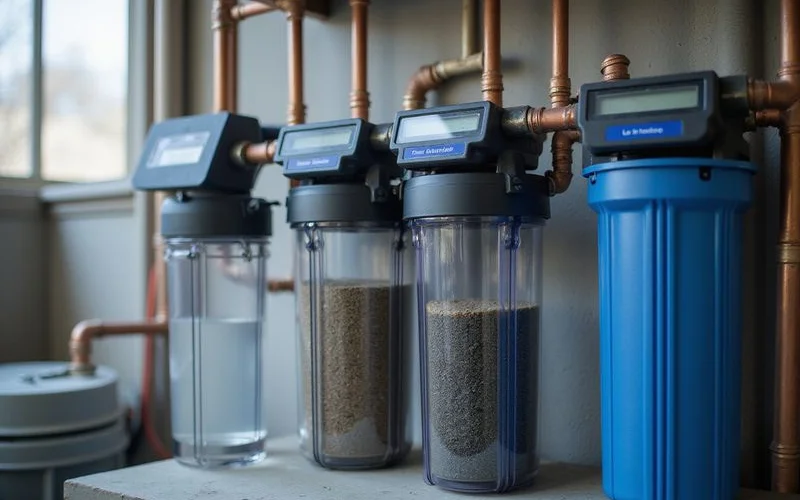
The most effective whole house filters for Utah conditions use a multi-stage approach to tackle the complex mix of sediment, chemicals, and minerals.
We have found that a 7-stage configuration offers the most complete protection:
- Sediment Pre-Filter: Captures sand, silt, and rust flakes—crucial during the spring runoff season when sediment levels in Utah water spike.
- KDF-55 Media: The heavy lifter that removes up to 98% of chlorine and water-soluble heavy metals like lead and mercury.
- KDF-85 Media: Specifically targets iron and hydrogen sulfide (the “rotten egg” smell), which is common in well-water supplemented areas.
- Granular Activated Carbon (GAC): Polishes the water by absorbing chlorine remnants, pesticides, and herbicides.
- Catalytic Carbon: A specialized stage that targets chloramines and persistent organic chemicals that GAC might miss.
- Ion Exchange Resin (Optional Hybrid Layer): Some advanced systems include a layer to reduce hardness minerals, though a dedicated softener is usually better for our hardness levels.
- Post-Filter: A final safety net to catch any remaining fine particles, ensuring the water at your tap is crystal clear.
This comprehensive layering ensures that no single contaminant can bypass the system.
Our customers consistently report that water from a multi-stage system tastes crisp and clean, comparable to our premium water refill station options.
Whole House Filter vs. Water Softener: Do You Need Both?
This is the single most common question we get during consultations.
We believe in being 100% transparent: A water filter cleans the water, but it does not soften it.
- A Water Filter: Removes harmful chemicals (chlorine, arsenic, VOCs), improves taste, and removes sediment. It makes water safer to drink and bathe in.
- A Water Softener: Physically removes calcium and magnesium minerals to prevent scale buildup. It protects your pipes, water heater, and appliances.
For Utah homes, we almost always recommend a “Hybrid” or “Dual” approach.
If your hardness is over 10 GPG (which is true for 90% of the Salt Lake Valley), a filter alone cannot stop the scale that destroys tankless water heaters and dishwashers.
Our favorite setup is installing a whole house filter to clean the water first, followed by a water softener to remove the hardness.
This combination gives you the best of both worlds: spa-quality water that is safe to drink and won’t destroy your expensive home appliances.
What Does a Whole House Filter Cost in Utah? (2026 Update)
Pricing has shifted slightly this year due to increased material costs, but high-quality water is still an accessible investment.
We have broken down the typical costs you can expect for professional-grade equipment and installation in the Salt Lake area:
| System Type | Recommended For | Estimated Cost (Installed) |
|---|---|---|
| Basic Carbon Filter (2-Stage) | Taste & Odor only (Apartments) | $800 - $1,200 |
| High-Flow KDF/Carbon (5-7 Stage) | Standard Homes (3-4 people) | $1,800 - $2,800 |
| Hybrid System (Filter + Softener) | Complete Protection (Best for Utah) | $3,500 - $5,500 |
| Professional Installation Labor | Licensed Plumbing Work | $400 - $800 |
At Water & Wellness West Valley, our whole home filtration systems start at just $50 per month with $0 down, making professional-grade water treatment accessible without a large upfront investment.
This includes professional installation by our Master Plumber, ensuring your warranty is protected and your system is code-compliant. To learn about ongoing maintenance, see our guide on how often to change your whole house water filter.
Signs Your Utah Home Needs a Whole House Filter
Sometimes the signs of poor water quality are obvious, but often they are subtle and cumulative.
We recommend checking for these specific indicators common in our region:
- Short Water Heater Life: If you are replacing your water heater every 6-8 years instead of 12-15, sediment and scale are likely the culprits.
- Chlorine Smell: If your morning shower smells like a public swimming pool, your water has high levels of chlorine or chloramines.
- Dry, Itchy Skin: Hard water and chlorine strip natural oils from your skin, worsening conditions like eczema (especially in Utah’s dry climate).
- Cloudy Ice Cubes: Clear ice requires pure water; cloudy or bad-tasting ice indicates high Total Dissolved Solids (TDS).
- Orange or Pink Stains: This often indicates bacteria or iron presence in your bathroom fixtures.
How to Get Started
The first step is understanding exactly what is in your water right now.
We know that water quality can change from street to street depending on the age of the city pipes and your specific water source.
At Water & Wellness West Valley, we offer a free in-home water test that measures hardness grains, chlorine levels, iron, and TDS.
You will see the results right in your kitchen, and we will give you a straightforward, honest recommendation based on the data—no pressure, just answers.
Ready to find the right filter for your home? Schedule your free water test or call us at (801) 967-9669.
Our team has been helping Salt Lake County families improve their water quality for over two decades, and we would be honored to help your family too.
About Noah Hoggan
20+ Years Experience | BBB A+ Rated | Master Plumber on Staff
Noah Hoggan has been helping Utah families improve their water quality for over 20 years. As the owner of Water & Wellness West Valley and a BBB A+ rated business, he brings hands-on expertise in water filtration, softening, and purification systems tailored to Salt Lake County's unique water conditions.
Get Your Free Water Test
Wondering about your home's water quality? Our experts will test your water and provide honest recommendations — no pressure, no obligation.